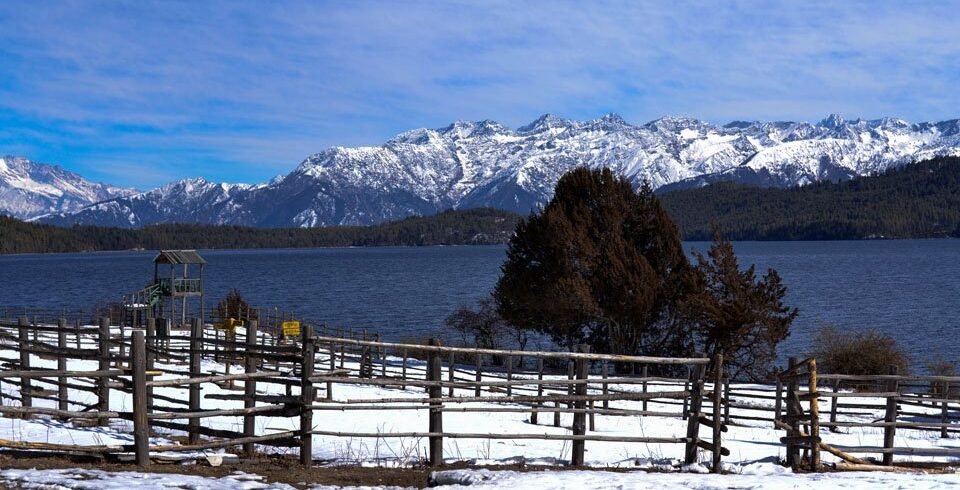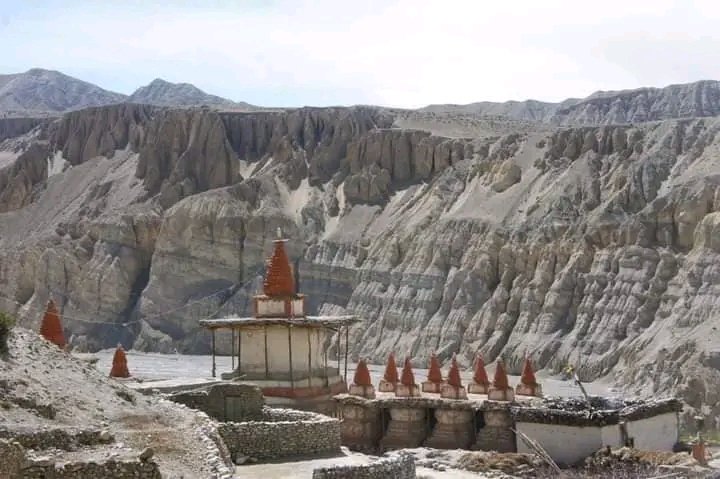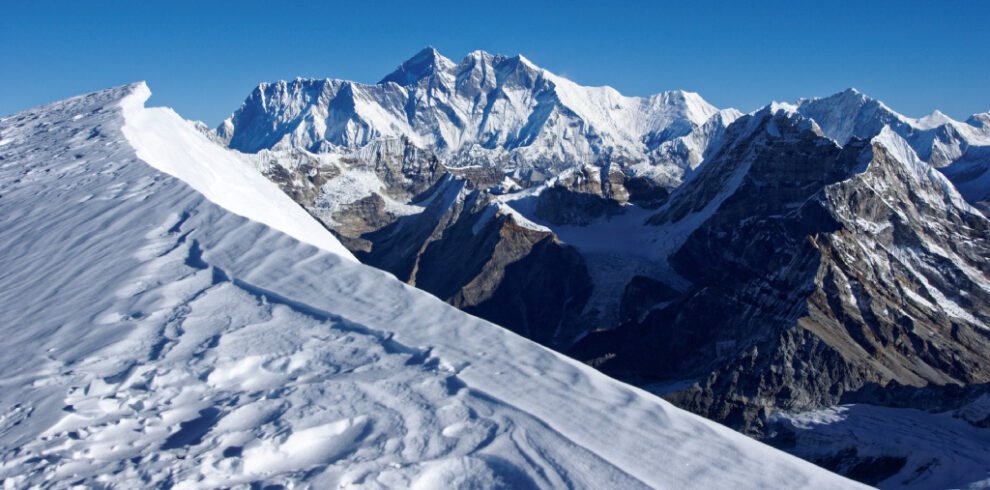
The Everest 3 High Pass Trek takes you on a less-traveled route to Everest Base Camp, offering breathtaking views of towering Himalayan giants including Mt. Everest, Lhotse, Ama Dablam, Nuptse, Thamserku, and many more.
Known as one of the most challenging and adventurous treks in the Everest region, this journey is perfect for thrill-seekers who want to push their limits and experience the raw beauty of the Himalayas.
This epic adventure takes you across three high mountain passes above 5,000 meters – Renjo La (5,388m), Cho La (5,380m), and Kongma La (5,535m) – while also giving you the chance to climb three iconic viewpoints: Gokyo Ri (5,483m), Kala Patthar (5,545m), and Chhukung Ri (5,550m). Each ascent rewards you with unparalleled panoramas of the world’s highest peaks and stunning glacial landscapes.
The Everest 3 High Pass Trek is not just a trek – it’s a once-in-a-lifetime Himalayan adventure, combining rugged trails, high-altitude challenges, and unforgettable scenery.
Trip Info
-
Hotel/ Tea house.
-
Autumn/ Spring
-
5564m
-
Jeep/ Car/ fly.
-
5/6 hours
Overview
Embark on the ultimate Everest High Pass Trek, also known as the Three Passes Trek — a thrilling high-altitude adventure through the heart of the Khumbu region. This challenging journey takes you across three of its most spectacular passes: Kongma La (5,535m / 18,159ft), Cho La (5,420m), and Renjo La (5,360m). Each crossing rewards you with sweeping panoramas of the world’s highest peaks, including Everest, Makalu, Lhotse, and Cho Oyu. Best of all, the trek demands no technical climbing skills, making it an ideal choice for experienced trekkers seeking the ultimate Himalayan challenge.
Trip Highlights
- Experience the best highlights of the Everest region on this challenging trek, crossing three pass crossing three passes over 5000m.
- Ascend Kala Pattar & Gokyo Ri to gaze upon the world's highest mountains from brilliant vantage points.
- UNESCO World Heritage Sites.
- Many high pass were spotted with chortens, prayer flags, and stupas.
- Famous Sherpa town in the Everest region - Namche Bazaar.
- Stunning views from Gokyo Ri.
- Exploration of the Himalayan Sherpa Community.
Itinerary
Upon arrival at Tribhuvan International Airport, Kathmandu, our representative will warmly welcome you and transfer you to your hotel. After check-in, you can rest and recover from your journey. If time permits, stroll through the lively streets of Thamel, famous for its cafés, markets, and trekking shops. In the evening, you will attend a briefing session about the trek and enjoy a welcome dinner with traditional Nepali cuisine.
Overnight stay in Kathmandu.
Today is a preparation day in Kathmandu before heading into the mountains. After breakfast, you will meet your trekking guide for a detailed briefing about the Everest 3 High Pass Trek. Your guide will review your trekking gear, help with any last-minute purchases or rentals, and ensure you are fully prepared for the high-altitude adventure ahead.
If time allows, you can also explore some of Kathmandu’s UNESCO World Heritage Sites such as Pashupatinath Temple, Boudhanath Stupa, or Swayambhunath (Monkey Temple). In the evening, take time to relax and mentally prepare for the trek.
Overnight stay in Kathmandu.
Early in the morning, you will take a thrilling 35-minute flight to Lukla, one of the world’s most famous mountain airstrips. The flight itself offers stunning aerial views of the Himalayan range, setting the tone for the adventure ahead.
Upon landing in Lukla (2,840m), you will meet the rest of your trekking team and begin your journey on foot. The trail descends gently through picturesque Sherpa villages, mani walls, and prayer wheels, following the Dudh Koshi River. After about 3–4 hours of trekking, you will arrive in Phakding (2,610m), a charming riverside village.
Overnight stay in a tea house at Phakding.
After breakfast, you will continue trekking along the Dudh Koshi River, crossing several suspension bridges draped with colorful prayer flags, including the famous Hillary Suspension Bridge. The trail passes through small Sherpa villages such as Monjo before entering the Sagarmatha National Park, a UNESCO World Heritage Site.
From here, the path gradually climbs through pine forests with glimpses of Mt. Thamserku (6,608m). The final ascent to Namche is challenging, but the reward is worth it – as you approach Namche Bazaar (3,440m), the gateway to the Everest region, you’ll be greeted with your first distant views of Mt. Everest and Lhotse.
Namche is a vibrant mountain town with markets, bakeries, internet cafés, and gear shops, making it a hub for trekkers and climbers.
Overnight stay in Namche Bazaar.
Today is reserved for acclimatization, an essential part of adjusting to the higher altitude before ascending further. Instead of resting entirely, you’ll take a short hike to help your body adapt while enjoying incredible Himalayan views.
A popular option is a hike to the Everest View Hotel (3,880m), where you can enjoy panoramic views of Mt. Everest, Lhotse, Nuptse, Ama Dablam, and Thamserku. Another rewarding excursion is a visit to the Sherpa Culture Museum or Khunde and Khumjung villages, where you can explore the Edmund Hillary School and Khumjung Monastery.
After the hike, you’ll return to Namche Bazaar, where you can relax, explore the bustling market, or enjoy a warm drink in one of its cozy cafés.
Leaving Namche behind, today’s trek takes you off the main Everest Base Camp route and onto a less-traveled trail toward Thame. The path is peaceful, winding along the Bhote Koshi River through pine forests, mani walls, and small Sherpa villages.
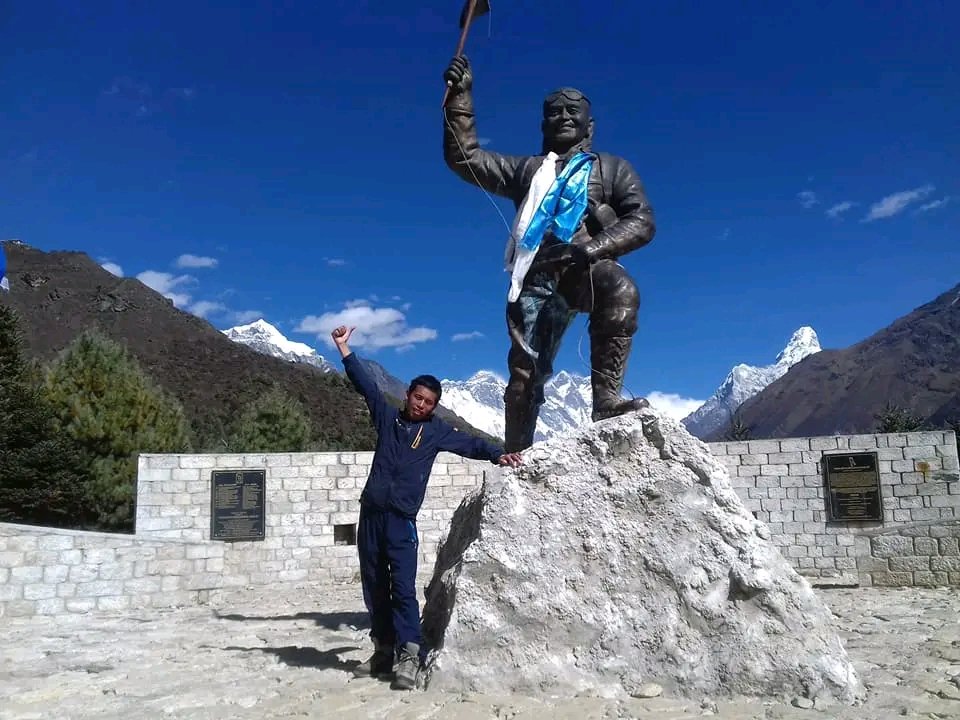
As you ascend gradually, you’ll be rewarded with stunning views of Kongde Ri, Kusum Kanguru, and Thamserku. Thame (3,820m) is a traditional Sherpa village known for its rich culture and historic connections to early Everest expeditions. It is also the hometown of several famous Sherpa climbers, including Tenzing Norgay.
If time allows, you can visit the ancient Thame Monastery, perched on a hill above the village, offering a serene atmosphere and panoramic mountain views.
Today, the trail follows the ancient trade route to Tibet, used by traders for centuries. You’ll trek along the banks of the Bhote Koshi River, passing through yak pastures, stone houses, and remote Sherpa settlements. The landscapes become more rugged and open as you gain altitude, with fewer trees and more alpine scenery.
Along the way, you’ll have magnificent views of peaks like Kongde Ri, Teng Kangpoche, and Nangpa La Pass, which connects Nepal with Tibet. The walk is steady and moderately challenging as you adapt to higher elevations.
After about 5–6 hours of trekking, you’ll reach Marulung (4,210m), a quiet settlement where you can enjoy the mountain serenity and prepare for the upcoming Renjo La Pass crossing.
Today’s trek is a gradual ascent through open alpine terrain, offering stunning views of the Himalayan peaks and surrounding glaciers. The trail passes through high pastures, rocky landscapes, and small, remote settlements, giving you a real sense of the remote Everest region.
As you trek, the vistas of Ama Dablam, Thamserku, and Kangtega become increasingly prominent, creating a perfect backdrop for photography and short breaks. The trek is moderately challenging, allowing your body to adjust to higher altitudes in preparation for the first high pass, Renjo La.
After approximately 5–6 hours of trekking, you will reach Lumde (4,368m), a small settlement with breathtaking panoramic views of Gokyo Valley and the surrounding peaks.
Today is one of the most challenging and rewarding days of the trek as you cross the first of the three high passes, Renjo La (5,360m). The trail ascends gradually through rocky paths and glacial moraine, offering breathtaking views of Gokyo Valley, pristine glaciers, and the surrounding Himalayan peaks.
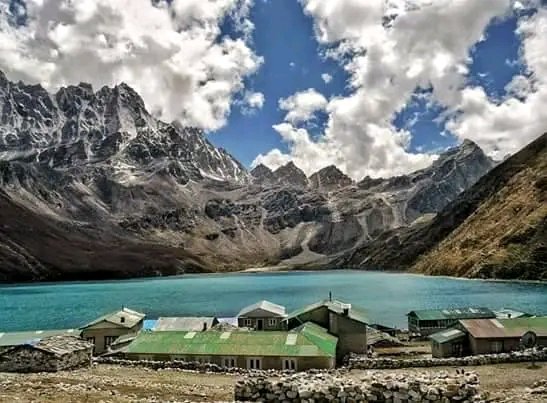
From the top of Renjo La, you’ll be rewarded with spectacular panoramic views of Mt. Everest, Makalu, Lhotse, Cho Oyu, and the turquoise lakes of Gokyo below. After taking in the stunning scenery, you will descend carefully to reach Gokyo (4,790m), a peaceful village nestled beside Gokyo Lake, renowned for its serene beauty and towering mountain backdrop.
The trek today is physically demanding, taking approximately 8–9 hours, but the unmatched vistas make it an unforgettable experience.
Today begins with an early morning climb to Gokyo Ri (5,483m), a short but steep ascent that rewards you with one of the best panoramic views of the Everest region. From the summit, you can see Mt. Everest, Lhotse, Makalu, Cho Oyu, and the pristine Gokyo Lakes reflecting the surrounding peaks.
After soaking in the breathtaking vistas, you will descend to Gokyo village for breakfast, then continue trekking eastward through moraines, glacial paths, and alpine terrain toward Dragnag (also called Thangnag, 4,750m). The trail offers a mix of challenging inclines and gentle descents, with magnificent views of Cho Oyu and surrounding peaks along the way.
The trek today takes approximately 6–7 hours. Upon arrival in Dragnag/Thangnag, you’ll settle into a tea house and enjoy a well-earned rest.
Today is one of the most challenging days of the trek as you cross the second high pass, Cho La Pass (5,420m). The day starts with a steep ascent through rocky and icy terrain, gradually leading you to the top of the pass. From here, you are rewarded with panoramic views of towering peaks, including Mt. Cho Oyu, Makalu, and Lhotse, and sweeping glacial landscapes.
After taking in the stunning vistas at Cho La, you will carefully descend along moraines and alpine trails toward Dzongla (4,700m). The descent requires focus, as the terrain is rugged, but the dramatic scenery makes it worthwhile. The trek today typically takes 7–8 hours, depending on weather and pace.
After breakfast, you will continue your trek through the stunning alpine terrain of the Everest region. The trail ascends gradually, offering breathtaking views of Cho Oyu, Nuptse, and Everest, as well as the vast Khumbu Glacier. Along the way, you’ll pass moraine fields, glacial streams, and small settlements, experiencing the remote beauty of the high Himalayas.
The trek today is moderately challenging, taking approximately 6–7 hours, culminating at Gorakshep (5,140m), a small settlement that serves as the base for Everest Base Camp. Here, you’ll rest and acclimatize in preparation for tomorrow’s highlight – Everest Base Camp.
Today is one of the most memorable days of the trek. You will begin early with a trek from Gorakshep to Everest Base Camp (5,364m). The trail passes alongside the Khumbu Glacier, with panoramic views of Everest, Lhotse, Nuptse, and Pumori. Arriving at the base camp, you can soak in the incredible sight of the world’s highest peak and the surrounding dramatic landscapes.
After spending time at Everest Base Camp, you will descend along the same trail to Lobuche (4,910m), enjoying views of moraines, glacial streams, and towering peaks along the way. The trek today is long, taking approximately 7–8 hours, but the experience of standing at the foot of Everest makes it unforgettable.
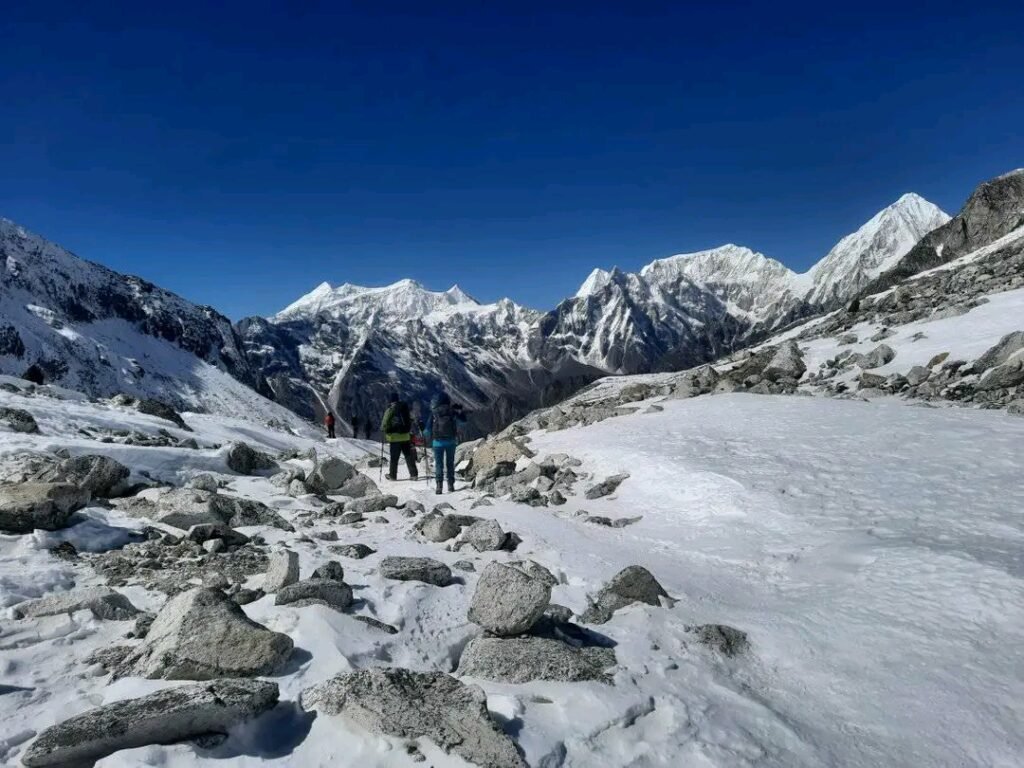
Today is another high-altitude challenge as you cross the third and final high pass, Kongma La (5,535m). The trek begins with a steady ascent from Lobuche, navigating glacial moraine, rocky terrain, and snow-covered slopes. At the summit of Kongma La, you are rewarded with breathtaking panoramic views of Everest, Lhotse, Makalu, Cho Oyu, and the surrounding peaks.
After spending time at the pass and capturing the spectacular scenery, you will descend carefully to Chhukung (4,730m), a picturesque settlement nestled in the Khumbu region. The descent offers views of glaciers, snow-capped peaks, and the serene alpine landscape, making for a truly memorable trek.
Today, you will trek from Chhukung to Island Peak Base Camp (5,200m), preparing for the Island Peak Climb. The trail gradually ascends through alpine meadows, rocky terrain, and glacial moraine, offering breathtaking views of Island Peak (Imja Tse), Lhotse, Nuptse, and Ama Dablam.
The trek takes approximately 4–5 hours, allowing you to acclimatize at the base camp while enjoying the spectacular surrounding landscapes. The area is quiet and remote, giving you a real sense of the high Himalayas. At the base camp, your guides will brief you on the climbing route, safety measures, and necessary preparations for the summit attempt on Island Peak.
Today is the highlight of your Island Peak adventure. You will start the climb early in the morning, navigating rocky ridges, snow slopes, and fixed ropes under the guidance of your experienced climbing team. The ascent to the Island Peak summit (6,189m) is challenging but immensely rewarding, offering panoramic views of Everest, Lhotse, Nuptse, Ama Dablam, and the surrounding peaks.
After celebrating your summit achievement and taking photos, you will carefully descend back to Island Peak Base Camp and continue trekking down to Chhukung (4,730m). The day is long and demanding, typically taking 10–12 hours, but reaching the summit of Island Peak is a once-in-a-lifetime accomplishment.
After a well-deserved rest following the Island Peak climb, you will begin your descent toward Tengboche (3,870m). The trail gradually winds through glacial valleys, alpine meadows, and rhododendron forests, offering panoramic views of Ama Dablam, Thamserku, and Everest along the way.
Tengboche is home to the famous Tengboche Monastery, the largest monastery in the Khumbu region, with its impressive prayer hall and stunning backdrop of the Himalayas. You will have the opportunity to explore the monastery, observe local rituals, and enjoy the peaceful surroundings before settling in for the evening.
The trek takes approximately 5–6 hours, making it a relatively relaxing day compared to previous high-altitude challenges.
Today marks the beginning of your descent toward the lower Khumbu region. The trail gently winds downhill through rhododendron and pine forests, passing charming Sherpa villages and mani walls along the way. You will retrace part of the route you took earlier in the trek, enjoying familiar landscapes from a different perspective.
The trek is approximately 6–7 hours, making it a moderately easy day, allowing your body to recover from the high-altitude climbs. Upon reaching Monjo (2,835m), a small village near the entrance of Sagarmatha National Park, you can relax and reflect on the incredible journey through the Everest region.
Today, you will complete your final day of trekking by making your way back to Lukla, the starting point of your Everest adventure. The trail descends gently through forests, suspension bridges, and traditional Sherpa villages, offering scenic views and a chance to appreciate the landscapes one last time.
The trek takes approximately 5–6 hours, allowing for a leisurely pace with breaks for photos and refreshments along the way. Upon arrival in Lukla, you can celebrate the completion of your challenging and rewarding trek and spend the evening relaxing at a tea house while reflecting on your incredible journey through the Everest region.
After breakfast, you will take an early morning scenic flight from Lukla back to Kathmandu. The flight offers stunning aerial views of the Himalayas, including peaks such as Everest, Lhotse, and Ama Dablam, giving you one last glimpse of the magnificent mountains you’ve traversed.
Upon arrival in Kathmandu, you will be transferred to your hotel. The rest of the day is free to relax, explore the city, or shop in Thamel for souvenirs and trekking gear. In the evening, you may enjoy a farewell dinner to celebrate the successful completion of your Everest 3 High Pass & Island Peak adventure.
Today marks the end of your incredible Everest adventure. Depending on your flight schedule, you may have some free time to relax, shop for souvenirs, or explore Kathmandu one last time. Our representative will transfer you to Tribhuvan International Airport for your onward flight.
We hope you had a memorable and life-changing experience on the Everest 3 High Pass & Island Peak Trek and look forward to welcoming you on another adventure in the Himalayas.
Includes/Excludes
Cost Includes
- Airport pick up and transport by private Car/Jeep.
- Three nights’ standard twin-sharing Hotel in Kathmandu with breakfast.
- Three meals a day (Breakfast, lunch, and dinner) during the trek.
- Fresh fruit every evening after dinner.
- Trekking Lodge (Tea House) accommodation during the trek.
- All necessary paperwork, including Sagarmatha National Park Entry Permit & Khumbu Pasang Lhamu Rural Municipality fees.
- Kathmandu-Lukla-Kathmandu (Ramechhap -Lukla- Ramechhap) flight with private airport transfer and domestic airport tax.
- A highly experienced, helpful, knowledgeable, friendly, English-speaking, and trained.
- Government license holder guide with all his salary, food, drinks, accommodation, transport, and insurance.
- Strong, helpful Sherpa porters with proper safety equipment and walking equipment, his salary.
- food, accommodation, and insurance (one porter for two people).
- Comprehensive medical supplies (a first aid kit will be available).
- Arrangement of emergency helicopter service (paid by your Travel Insurance Company).
- Government taxes and official expenses.
- Trip achievement certificate after successful trip completion.
- will ensure your health during the trek.
- Assistant guide for groups of 7 or more people.
Cost Excludes
- Meals whilst you are in Kathmandu - lunch, and dinner.
- Nepal entry visa fee (easy to obtain the visa on arrival at Tribhuvan International Airport.
- Kathmandu). $30 USD for 15-day, $50 USD for 30 Days, and $125 USD for 90 Days visa.
- Personal travel and medical insurance.
- International airfare.
- Your personal expenses.
- All the alcoholic and nonalcoholic, soup, tea, coffee, hot chocolate, and cocoa.
- Mineral water, extra food, cold and hot drinks on trek ( i.e., those you choose to purchase along the way and during evenings in the tea houses)
- All desserts & sweet things like chocolate, cake, pie, pudding.
- Hot shower and battery charging at the tea houses.
- Tips for the guide, porter, and driver (tipping is expected).
- Excess baggage of more than 10 kg for the Lukla flight.
FAQs
This trek is challenging and suitable for experienced trekkers with a good level of fitness. It involves high-altitude trekking above 5,000m, three high passes, and the climb of Island Peak (6,189m). Proper acclimatization and preparation are essential.
No prior technical climbing experience is required, but basic mountaineering training, guidance from certified climbing instructors, and the use of ropes, crampons, and ice axes are necessary for safety. The ascent is demanding but achievable with professional support.
The ideal seasons are spring (March to May) and autumn (September to November). During these months, the weather is generally stable, skies are clear, and mountain views are at their best. Winter is cold and risky, and the monsoon season (June to August) brings heavy rain and slippery trails.